

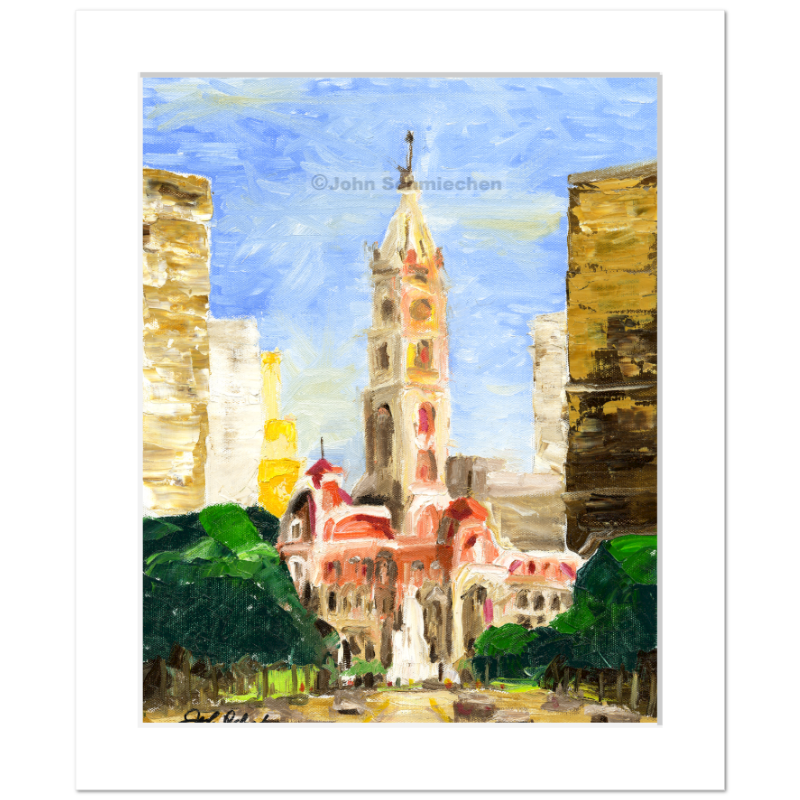
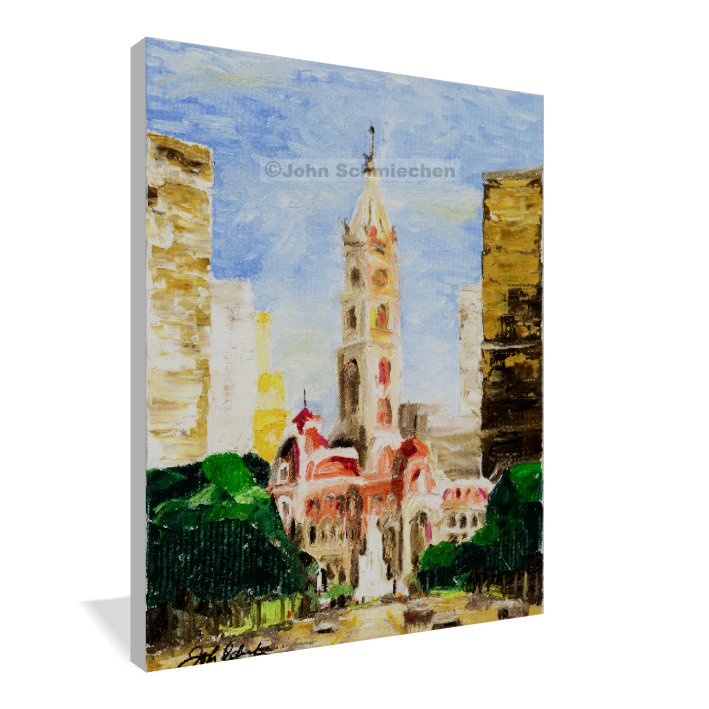
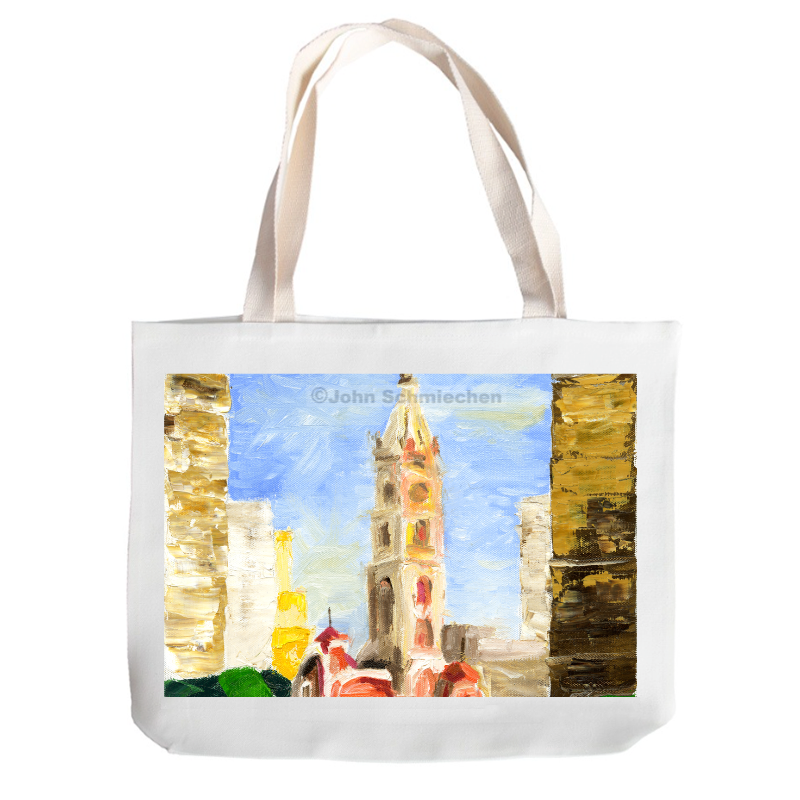
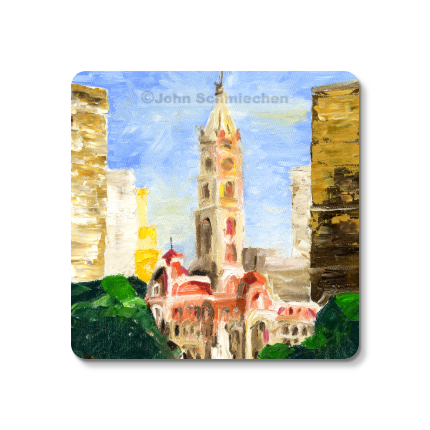
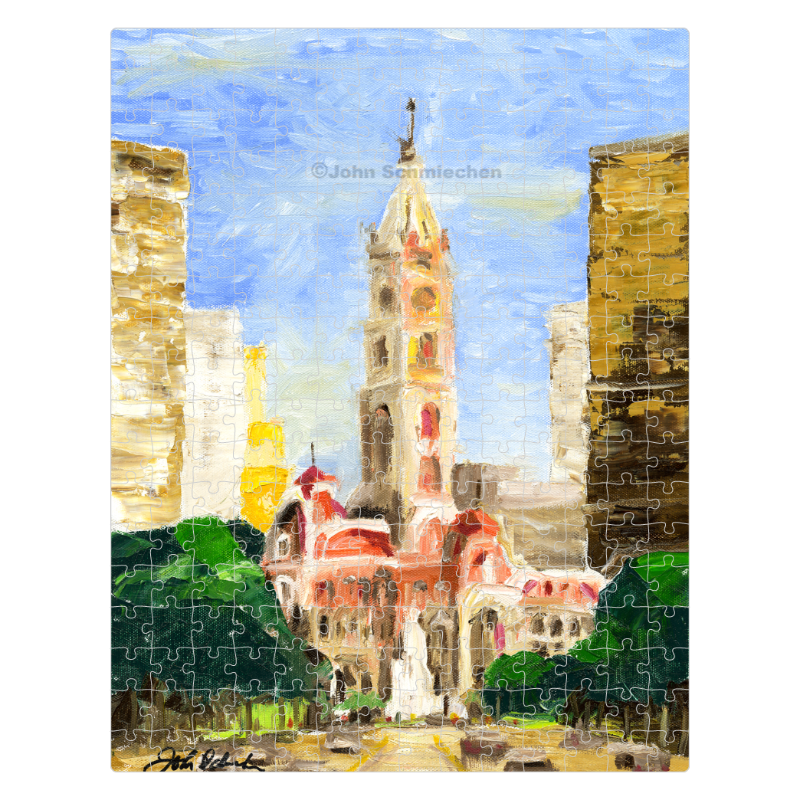
Philadelphia’s famed City Hall is an engineering, architectural, and sculptural masterpiece. Patterned after the Palais des Tuileries and the Louvre in Paris, it is an exceptional example of the Second Empire style. Completed in 1901, it required three decades to complete. It is the tallest masonry building without a steel structure and the largest municipal building in North America. In sheer size, City Hall was the largest building in the country until the Pentagon was completed in the mid 1940s. The massive tower is topped with a 27-ton, 37-foot statue of William Penn, which soars 548 feet above street level. Designed by the famous sculptor Alexander Calder, this statue is just one of the hundreds of interior and exterior sculptures Calder created to adorn City Hall.
Shop:
-
 Select options This product has multiple variants. The options may be chosen on the product page
Sunshine on City Hall Matted Paper Giclée
Price range: $26.00 through $275.00 -
 Select options This product has multiple variants. The options may be chosen on the product page
Sunshine on City Hall Note Cards
Price range: $32.00 through $85.00 -
 Select options This product has multiple variants. The options may be chosen on the product page
Sunshine on City Hall Stretched Canvas Giclée
Price range: $55.00 through $235.00


Related images:

Academy of Music
One of Philadelphia’s most beloved places, the interior is patterned after the Neo-baroque La Scala in Milan.
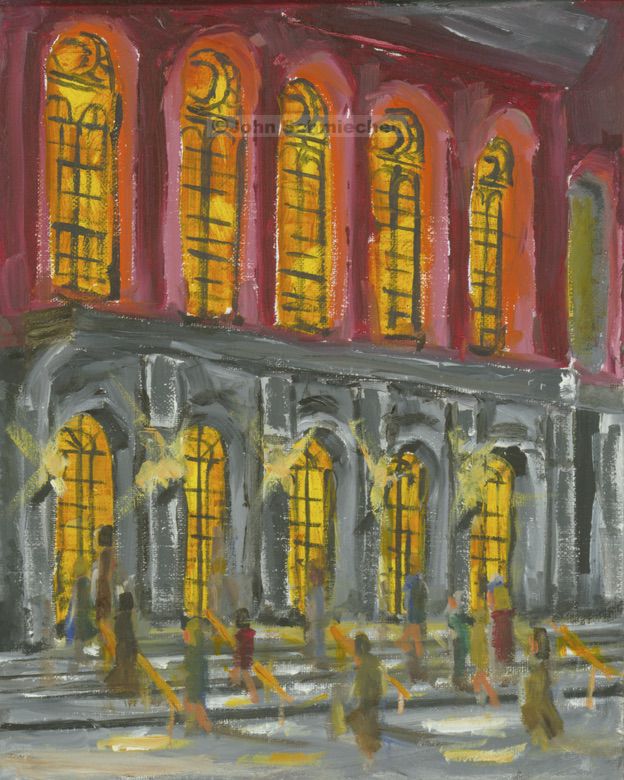
Academy of Music, Summer Night
The Academy of Music is one of Philadelphia’s most beloved places.
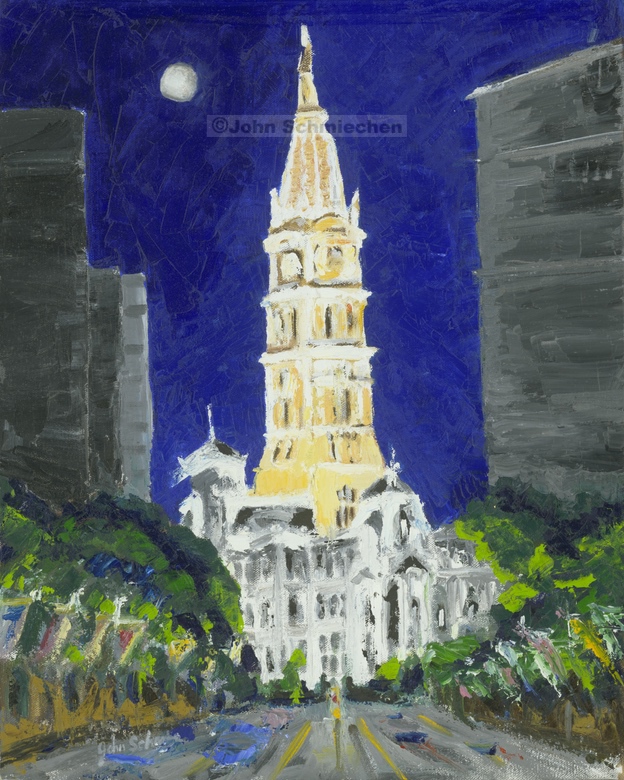
City Hall at Night
Philadelphia’s famed City Hall is an engineering, architectural and sculptural masterpiece, an example of the Second Empire style.
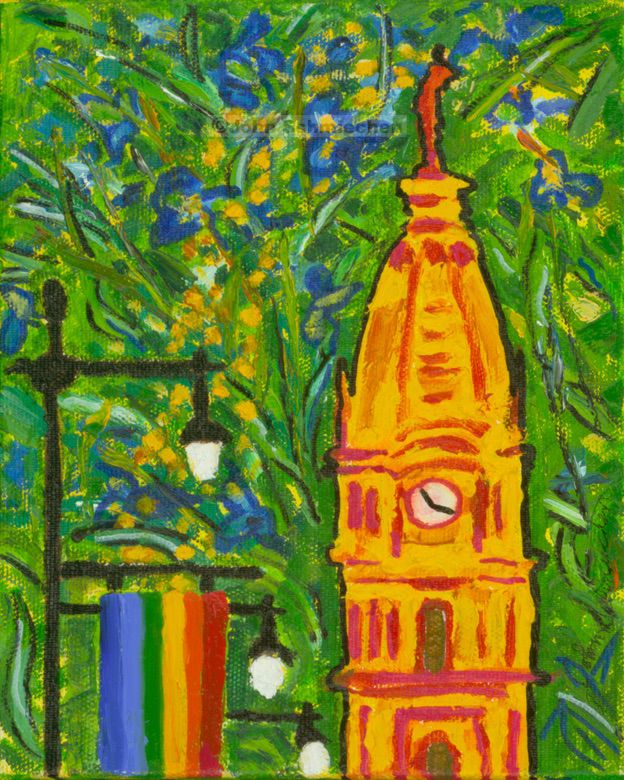
City Hall, Brotherly Love
Philadelphia’s famed City Hall is an engineering, architectural, and sculptural masterpiece.

Reading Terminal Market
Reading Terminal Market is America’s oldest indoor farmer’s market and one of Philadelphia’s most popular tourist attractions.
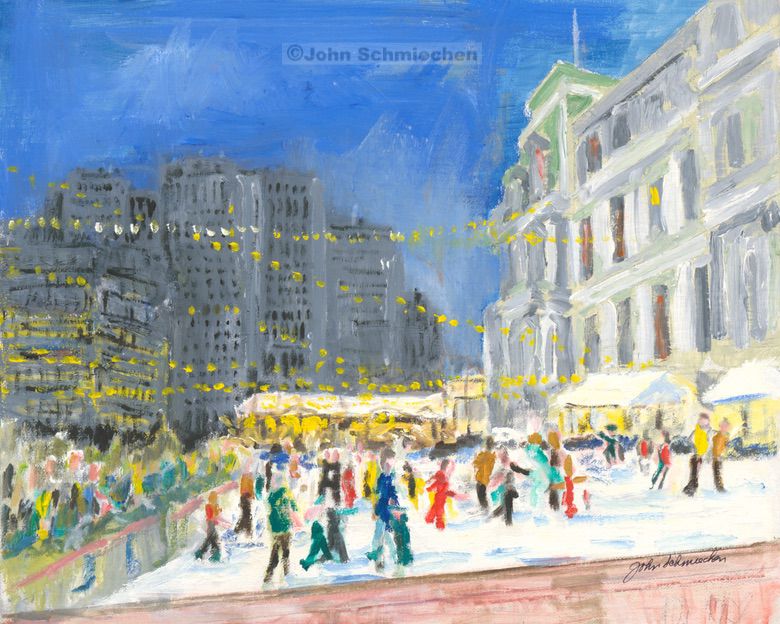
Skating at City Hall
Philadelphia’s famed City Hall is an engineering, architectural, and sculptural masterpiece.

Suburban Station
Suburban Station is a major commuter rail hub in Center City Philadelphia, opened in 1930 as part of the Pennsylvania Railroad’s electrification project.

The Drake
Designed in a Spanish Baroque and Art Deco style by the architectural firm Ritter and Shay, the Drake was constructed as a luxury hotel in 1929.
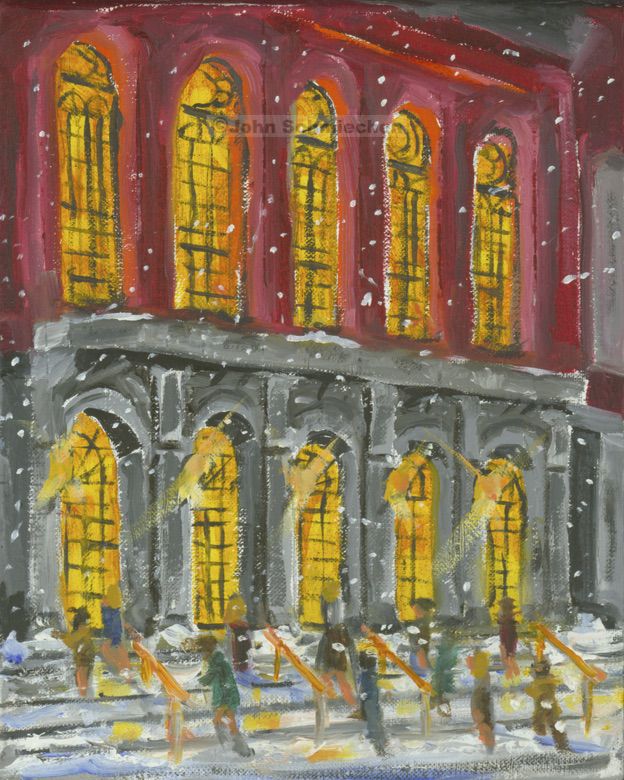
Winter at the Academy of Music
The Academy of Music is one of Philadelphia’s most beloved places.